Stories with Teeth
Some things bloom in sunlight.
The interesting things usually wait until dark.
This month, the Night Garden is getting crowded: a chef with a dead therapist and several inconvenient voices in her head is almost ready to meet the world; an ancient god is beginning to stir behind the curtain; archaeologists are reading letters no human being has opened in nearly four thousand years; and our other newsletters are asking what it means to nourish a body—or a soul—without trying to control what happens next.
Welcome back to Black Petal Press.
Something Is Blooming
Six Days Until Therapy Can Be Murder
On October 20, Clara Hastings officially enters the world.
She would probably prefer that we phrase that differently.
Therapy Can Be Murder
October 20, 2026
Therapy Can Be Murder begins with a Michelin-starred chef, a dead therapist, an inconvenient gap in her memory, and the deeply unfortunate possibility that the police may have a point.
Clara knows three things.
Her therapist is dead.
She was one of the last people scheduled to see him.
And during the period surrounding his murder, the six voices in her head are being considerably less helpful than one might hope.
The Sauce Committee has opinions, naturally.
One wants facts.
One wants sex.
One is terrified.
One is emotionally about three years old.
None can answer the question that matters:
Did Clara kill him?
That question begins the Poison Chef series—but it does not end there. Behind Clara’s investigation is something larger: patients who should not know one another, appointments that do not make sense, secrets Harry Lawson carried into the grave, and someone who appears to be arranging death with considerably more style than decency requires.
Therapy Can Be Murder arrives October 20, 2026.
Buy the Kindle edition — $6.99
And while Clara is sharpening her knives, something much older is waiting beyond the edge of the garden.
Coming February 9: Embrace of Apophis
She has died before.
He has loved her before.
And something ancient remembers both of them.
Embrace of Apophis, Book One of the Eternal Pursuit series, moves from modern life into ancient Egypt, reincarnation, forbidden love, divine betrayal, and a darkness that has been waiting thousands of years for another chance.
Two worlds.
Two very different kinds of danger.
Apparently Black Petal Press has a type.
Every Book Has a Beginning
The Day Clara’s Inner Voices Became the Sauce Committee
Clara Hastings was never supposed to be quiet.
From the beginning, she argued with herself.
Not metaphorically.
While I was working out who Clara was, I knew I did not want her internal world to read like a tidy row of alternate personalities waiting politely for their turn to speak. Clara is a chef. Her mind should be messier than that—sensory, opinionated, occasionally cruel, frequently funny, and always trying to turn catastrophe into something she can plate.
Then came the question:
What would a chef call the different parts of herself?
The answer was sitting in the kitchen.
The mother sauces.
And suddenly the Sauce Committee existed.
Espagnole could be ruthless.
Velouté could be seduction, pleasure, and the inconvenient conviction that almost any problem might improve if everyone involved were properly adored.
Hollandaise could panic.
Roux could catalog every detail.
Béarnaise could react to adulthood with the emotional sophistication of a small child denied dessert.
What began as a way of distinguishing Clara’s internal voices became something much more important to the story.
Because the Sauce Committee can tell Clara what they remember.
They can tell her what they fear.
They can accuse one another.
They can even lie.
What they cannot do is give Clara certainty.
And that became the question beneath the entire novel:
What happens when you cannot completely trust the person investigating the murder—even when that person is you?
The World Is Still Strange
A Letter Sealed for 3,800 Years
Imagine writing a private letter, sealing it inside a clay envelope and sending it across the ancient world.
Now imagine no one opening it for nearly 3,800 years.
That has essentially happened.
Ancient Assyrian merchants wrote correspondence on clay tablets and sometimes enclosed those tablets inside clay envelopes. Traditionally, reading the message meant breaking the envelope—the archaeological equivalent of solving the mystery by destroying part of the evidence.
New scanning techniques have changed that.
Researchers have now been able to see writing hidden inside unopened clay envelopes from the ancient city of Kanesh.
And what emerged from one of them was not a royal decree, a prophecy or instructions for a forgotten ritual.
It was a frustrated wife.
A woman named Anna-anna wrote to her husband, Ennum-Ashur, about her attempts to recover silver somebody owed him. The debtor, apparently, would not repay her directly.
Four thousand years later, civilization has changed considerably.
People avoiding repayment?
Less so.
What makes discoveries like this irresistible is not simply their age. It is the sudden collapse of distance between them and us.
For thousands of years, that woman’s irritation sat in darkness.
Then technology let us hear her again without breaking the object that kept her voice safe.
There are still unopened rooms.
Unread letters.
Buried cities.
Untranslated languages.
Objects whose purpose we have guessed at incorrectly for centuries.
The world has not run out of mysteries.
We have simply become very good at walking past them.
Source: Archaeology Magazine, September/October 2026.
Always Look Up
What We Miss When We Only Look Straight Ahead
We spend a remarkable amount of our lives looking directly in front of us.
At roads.
At screens.
At doors.
At schedules.
At the next thing demanding our attention.
But human beings have always built reminders to look somewhere else.
Upward.
The Egyptians aligned temples with celestial events.
Babylonian priests watched the movement of planets and recorded the sky with extraordinary care.
Cathedrals lifted ceilings so high that worshippers had to tilt their heads backward to take them in.
Ancient towers climbed toward gods.
Modern telescopes climb toward answers.
And sometimes looking up reveals something no one expected.
This month, Saturn reaches opposition, making the ringed planet visible for much of the night, and the Orionid meteor shower returns as Earth passes through debris left behind by Halley’s Comet. Later in October, the Moon passes close to the Pleiades—the cluster cultures around the world have watched, named, feared, celebrated, and used to mark seasons for thousands of years.
But Always Look Up is not just an astronomy column.
It is an instruction to look beyond the version of history you were taught.
Look at the person everyone else has overlooked.
Look for the thing that does not quite belong.
Look beyond what appears settled.
Mystery usually begins there.
Not necessarily in darkness.
Sometimes simply outside our habitual line of sight.
So sometime this month, step outside.
Or stand beneath a tree.
Or enter a museum and look above the display case instead of directly into it.
Notice something you would normally have passed without seeing.
The world becomes considerably stranger when we stop assuming the interesting things will place themselves directly in front of us.
Nourishing the Whole Human
How We Begin Matters
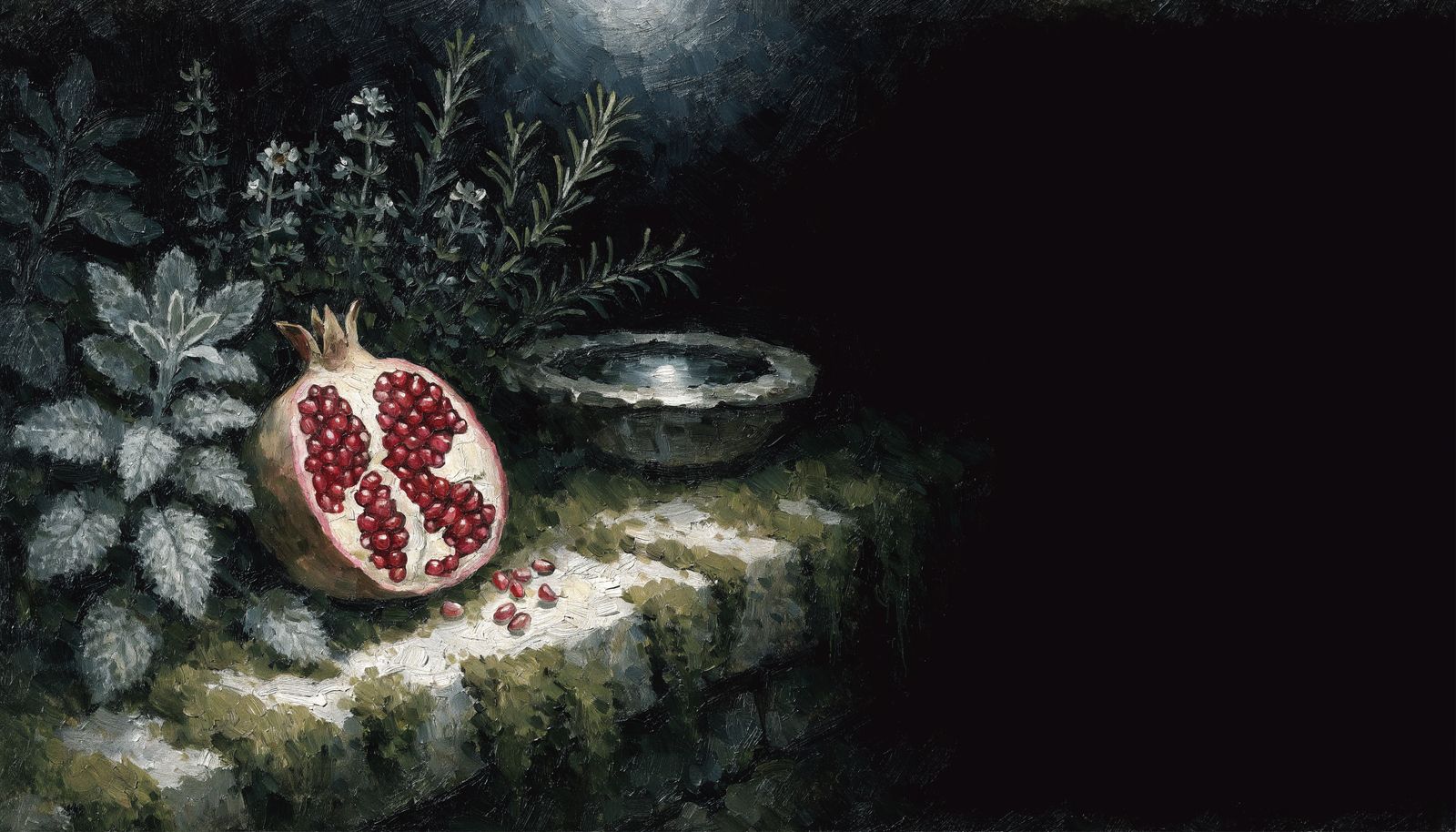
There is an odd contradiction in being human.
We spend enormous amounts of energy attempting to control outcomes we cannot control—and surprisingly little time tending to the small rituals we actually can.
This month, our two nonfiction newsletters approach that idea from very different directions.
How to Survive Being Human & Beyond
This month’s journey moves through higher dimensions and consciousness, then turns toward energy and vibration.
Week 78 · October 5 — Are You Living in Multiple Timelines at Once? What if time is not the straight line we were taught to expect?
Week 79 · October 12 — The Akashic Records: Accessing the Library of the Universe. The idea that every experience, thought and choice is recorded in a vast field of memory.
Week 80 · October 19 — How to Expand Your Consciousness Beyond the Physical Realm. What may lie past the five senses we usually trust to define reality.
Week 81 · October 26 — The Frequency of Emotions: Why High-Vibration Living Matters. Why a room can feel tense, or warm, before anyone says a word.
Together, these four pieces close Month 20: Higher Dimensions & Consciousness and open Month 21: Energy & Vibration—a reminder that transformation is not something we graduate from.
We live it.
Sacred Nourishment
Over at Sacred Nourishment, the kitchen table continues to become a meeting place between old food traditions, modern nutrition and the quieter question beneath both:
How do we feed ourselves in a way that actually feels like care?
This month’s explorations include:
Week 36 · October 5 — How to Grow Your Own Healing Herbs on a Budget — snipping basil, mint and rosemary from a plant a few feet from the stove.
Week 37 · October 12 — Affordable Protein Sources That Are Better Than Meat — what goes in the center of the plate when the answer is not meat.
Week 38 · October 19 — DIY High-Vibe Snacks That Cost Less Than Store-Bought Options — snacks you make yourself instead of paying $7.99 for six bites.
Week 39 · October 26 — How to Cook Healthy, Flavorful Meals with Just 5 Ingredients — real flavor on the evenings when cooking sounds better in theory.
No expensive powders required.
No food that tastes like penance.
Just the continuing experiment of discovering what happens when nourishment becomes something we participate in rather than something we police.
More Books Like This One
Women You Shouldn’t Entirely Trust
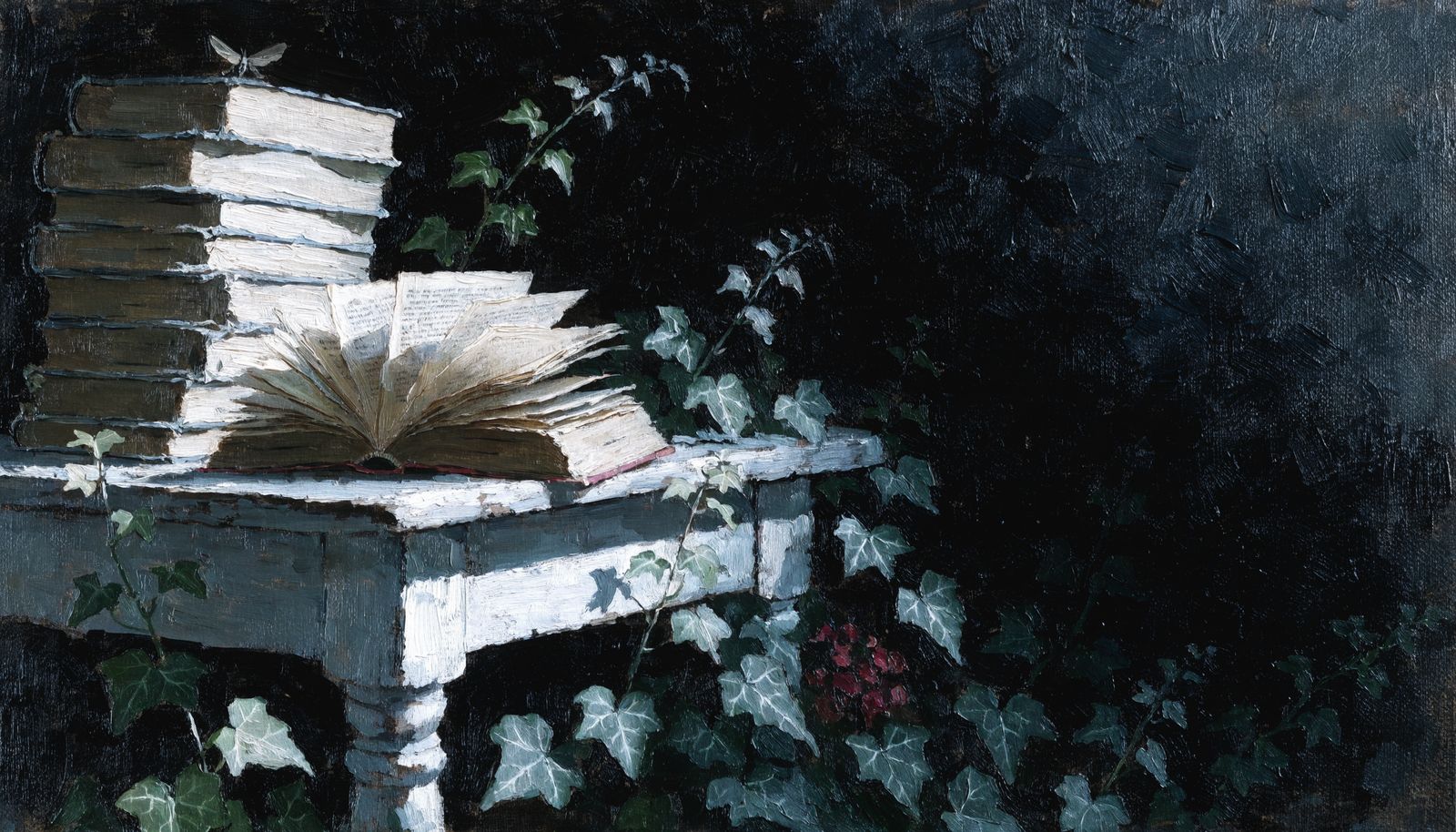
There is something irresistible about a narrator who cannot—or will not—give us the whole truth.
Sometimes she is lying.
Sometimes she is protecting herself.
Sometimes she genuinely does not know what happened.
And sometimes the most interesting possibility is that even she cannot distinguish among the three.
If Clara Hastings sounds like the kind of woman you enjoy spending several hundred pages worrying about, here are a few other books worth leaving on the garden table.
Rock Paper Scissors
A marriage already crowded with secrets becomes significantly worse during an anniversary trip to an isolated setting.
Feeney is particularly good at controlling what the reader thinks they know and then quietly removing the floor.
Readers who enjoy fractured perception, withheld information, shifting loyalties, and discovering that the story they have been reading is not quite the story they thought it was may feel at home here.
The Last House on Needless Street
A missing child.
A damaged man.
A strange house.
And a narrative that repeatedly forces the reader to reconsider who—or what—they believe.
It is darker and more psychologically disturbing than Poison Chef, but readers drawn to identity, memory, unreliable perception, and stories that reorganize themselves as they unfold may recognize some familiar territory.
Finlay Donovan Is Killing It
This one lives closer to the comic-criminal side of Clara’s world.
Finlay is a novelist and overwhelmed mother whose conversation about a murder plot is misunderstood as an offer to perform an actual murder.
Things deteriorate accordingly.
Dark comedy, crime, questionable decisions, escalating complications, and a woman attempting to maintain some semblance of ordinary life while everything around her becomes criminally inconvenient.
Clara would understand.
She would also critique the catering.
None of This Is True
Two women meet by apparent coincidence.
One begins telling the other her life story.
Then the boundaries between observer, storyteller, subject, and threat begin to collapse.
It is the sort of novel that asks a deceptively simple question:
How easily do we believe a story merely because someone tells it convincingly?
That may be one of the oldest traps in fiction.
And outside it.
Until Next Month
Thank you for walking through the Night Garden with us.
This month, one book opens.
Another waits beneath the soil.
Ancient voices are still being recovered from sealed envelopes.
Halley’s Comet is leaving pieces of itself across our sky.
Clara is making dessert.
And somewhere, something is happening that nobody has satisfactorily explained yet.
We will meet you there next month.
Thank you for visiting.
There will be murders. There will be gods. There will be food. There will be questions nobody has satisfactorily answered.
And every so often, we will open the gate after dark and see what has bloomed.
Welcome to the Night Garden.